

Digital Tools for First Responders: Bridging Education and Action
First responders are among the most credible voices in any community on topics of safety. Digital AR tools don’t replace that credibility — they amplify it, extending the reach of every community education interaction far beyond the original event.

Case Study: Improving Family Safety Awareness Through Immersive Education
Changing safety behavior is hard. Most adults know they should have a family fire escape plan. Most don’t have one. This case study examines how immersive AR education closes the gap between knowing and doing — using SmARt Kids deployments at community events as the lens.

National Fire Prevention Month: Modern Tools for Maximum Reach
Fire Prevention Month has been observed since 1922. What’s changed is the media environment those efforts operate in. Here’s how modern AR tools extend the reach of fire safety education beyond the event, beyond October, and into the year-round behaviors that save lives.

How Fire Departments Can Increase Community Engagement Using XR+AI
Fire departments are among the most trusted institutions in any community. AR gives them a tool that’s uniquely suited to their mission: an experience that’s fun enough to draw families in, educational enough to matter, and memorable enough to stick.
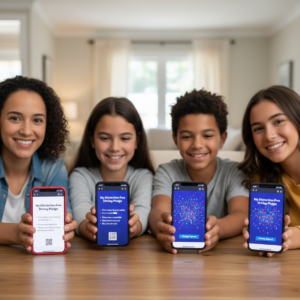
The Impact of Interactive Learning on Fire Safety Retention in Children
Children retain 5–10% of what they hear in a lecture. They retain 75–90% of what they actively experience. For fire safety education, where the retained information may one day save a life, this isn’t an academic distinction — it’s a life-safety issue.

Campaign ROI: Tracking Engagement, Conversion, and Recall
Was the campaign worth it? For XR campaigns, the answer is almost always yes — but ‘yes’ isn’t useful without a measurement framework that makes the case clearly and provides the learning that improves the next campaign.

The Future of Brand Storytelling Through XR
Storytelling is the oldest marketing tool we have. XR is bringing it back — not as nostalgia, but as the most sophisticated participatory storytelling medium that has ever existed. Here’s what brand stories look like when customers are inside them.
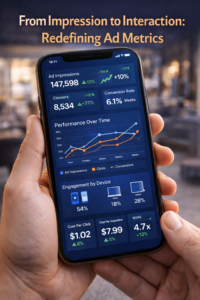
From Impression to Interaction: Redefining Ad Metrics
The impression measures opportunity for exposure. The click is a proxy for interest. Neither tells you whether your marketing actually worked. Interactive XR experiences produce behavioral data that finally closes the gap between activity and impact.
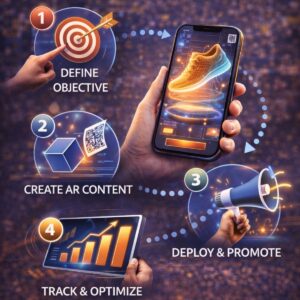
How to Build High-Converting AR Campaigns (Step-by-Step Framework)
Most brands approach AR as a creative exercise: build something cool and see what happens. The campaigns that actually convert are built differently — with a strategic architecture designed around a specific outcome from the very first step.

Interactive Advertising vs Traditional Ads: Performance Benchmarks
Traditional digital advertising has a 0.1% click-through rate. AR experiences produce a 94% lift in purchase conversion. These aren’t marginal differences — they’re a category shift. Here’s what the benchmarks actually show.

Seasonal Campaign Playbooks: Using AR for Holiday Promotions
Every retailer knows the seasonal calendar. The ones who win aren’t always the ones with the biggest budgets — they’re the ones who show up differently. Here’s a complete AR seasonal campaign playbook for the full retail calendar.
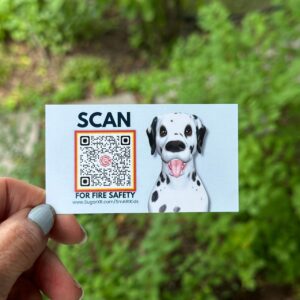
QR Code Marketing 2.0: From Scan to Experience
The QR code has had quite a redemption arc. Now that scanning behavior is mainstream, the question isn’t whether customers will scan — they will. The question is whether what you’ve built on the other side is worth their time.

The Psychology of Immersive Shopping Experiences
Retail has always been theater. The best merchants have always known that selling products is secondary to creating an experience. Here’s the neuroscience behind why immersive AR shopping experiences work — and how to design for maximum impact.

Retail Case Study: Turning Foot Traffic Into Revenue With XR
Does AR actually move the revenue needle? This case study walks through the mechanics of how augmented reality deployments translate foot traffic into measurable business outcomes — from sidewalk activation to data-driven follow-up.
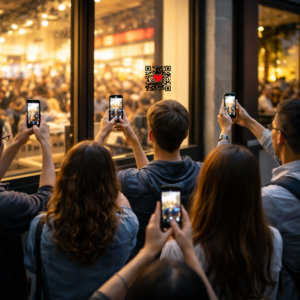
How BrowserXR+AI Increases In-Store Traffic and Dwell Time
Retailers have been asking the same question for decades: how do you get someone walking past your store to stop and come in? InstantAR has a compelling answer — and the foot traffic numbers prove it.
Measuring Engagement: What Matters in Interactive Experiences
Most marketing metrics are proxies for the thing we actually care about. Interactive XR experiences change that — giving you behavioral data that connects directly to business outcomes. Here’s the measurement framework that actually matters.

From Clicks to Immersion: The Evolution of Digital Interaction
Thirty years after the first banner ad, the click has become nearly worthless. Here’s how digital interaction evolved from clicks to engagement to immersion — and why the brands moving to experience-based marketing are pulling ahead.

How XR + AI Is Reshaping the Buyer Journey
The traditional marketing funnel is becoming obsolete. XR creates immersive engagement moments; AI turns those moments into intelligent, personalized relationships. Together, they’re rewriting how customers move from discovery to purchase.

No-App XR: Why Frictionless Experiences Are Winning
The moment a customer sees ‘Download the app to continue,’ you’ve lost them. Web-based AR eliminates that friction entirely — and the results are reshaping how brands think about customer engagement.
The State of XR in Customer Engagement (2026 Report)
Extended Reality has moved from the bleeding edge to the business mainstream. Here’s where XR stands in 2026, what the data is telling us, and why businesses that act now will define customer experience for the next decade.