First responders occupy a unique position in the public trust landscape. They are among the most credible voices in any community on topics of safety, emergency preparedness, and public health. When a firefighter tells a family how to escape a burning house, that family listens in a way they wouldn’t listen to a government website or a public service announcement.
That credibility is a resource. The question is how to extend it — to reach more families, to make educational moments more memorable, to bridge the gap between the brief interaction at a community event and the sustained behavior change that keeps families safe.
Digital XR+AI tools are the most effective current answer to that question. Not because they replace the first responder’s human presence, but because they amplify it.
The Amplification Model
Think of browser-based safety education as a force multiplier for first responder outreach. A firefighter who spends two hours at a community event can directly interact with a finite number of families. That same firefighter, armed with a QR code that launches an immersive safety experience, can extend their educational reach to everyone those families share it with — in their social networks, their neighborhoods, their extended family.
When families share XR+AI safety experiences on social media, the reach extends to networks the fire department could never physically access. When children show the QR code to their friends, the safety message travels through peer networks that are often more influential than adult instruction.
The first responder’s credibility is the seed. The digital tool is the growth mechanism.
Meeting the Technology Where Families Are
One barrier to first responder adoption of digital education tools has been the assumption that technology creates complexity. Browser-based XR + VisionAItools built on the no-download web platform eliminate this barrier almost entirely.
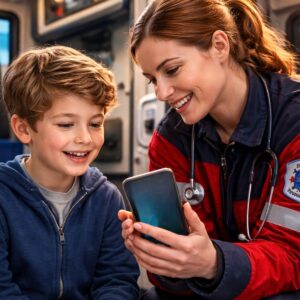
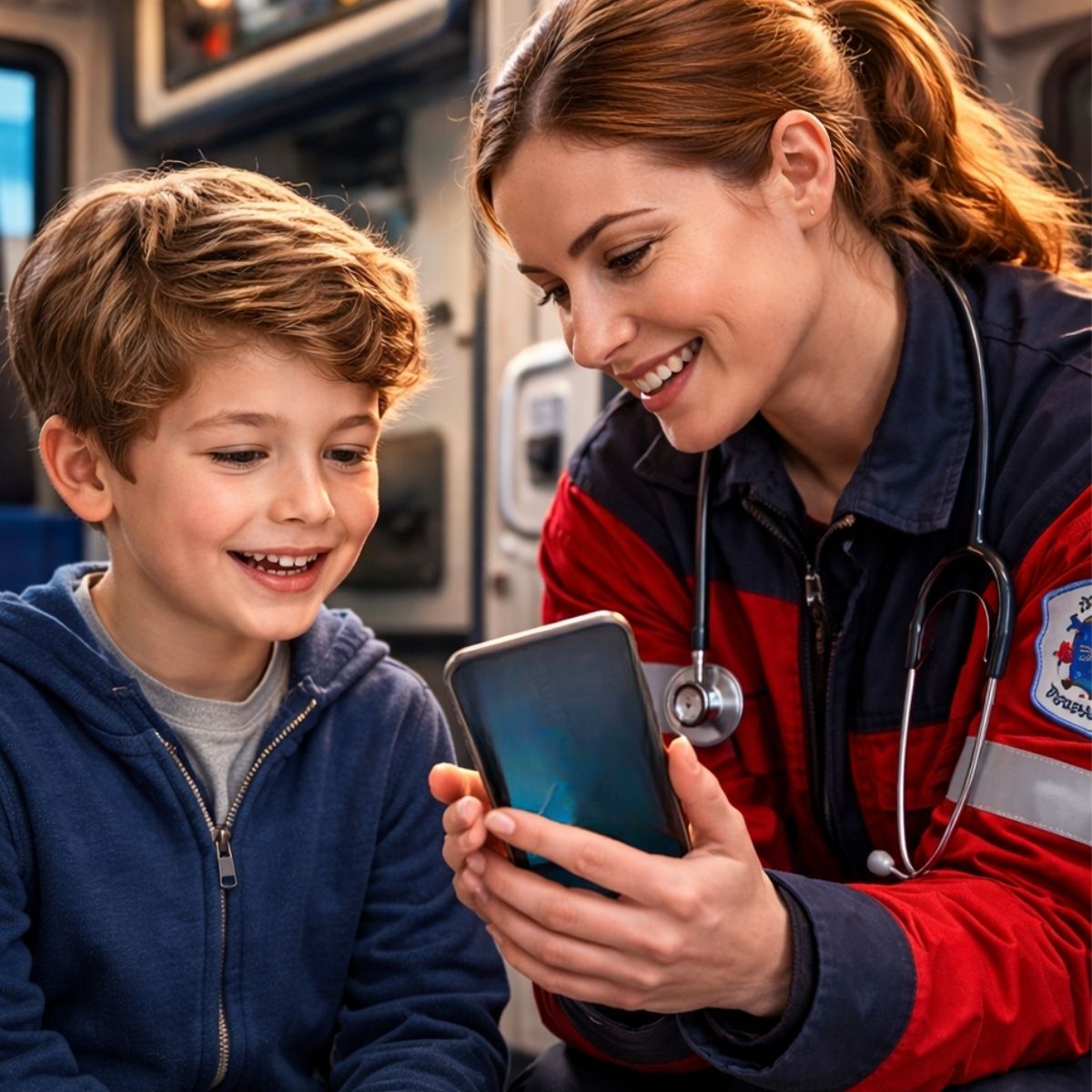
The firefighter’s job is to hand out or display a QR code. No technical setup. No app installation. No equipment to manage. The family’s smartphone does the rest. The experience launches in under three seconds, works on over 90% of smartphones, and requires no technical knowledge from anyone involved.
Data as a Resource for First Responder Programs
XR+AI safety programs generate something first responder outreach has historically lacked: data. Every scan, every engagement duration, every share is recorded. This data answers questions departments have never been able to answer before:
- Which communities are engaging with fire safety education and which are underserved?
- Which safety topics generate the most engagement?
- What event contexts produce the highest-quality engagement?
- How does October engagement translate into behavior indicators in the months that follow?
Fire departments applying for grants, reporting to municipal leadership, or making the case for expanded outreach budgets need evidence of impact. Engagement data from XR+AI deployments provides that evidence in a form that passive distribution methods never could.
The Bridge Between Education and Action
Most safety education efforts are strong on the education side and weak on the action side. The bridge between knowing and doing is memory — specifically, the kind of emotionally encoded, experientially grounded memory that translates into automatic behavioral responses under stress.
When a child practices “Get Low and Go” in an XR experience, crawling under animated smoke and feeling the sense of accomplishment when they make it out, they are building a motor memory and an emotional association that a pamphlet instruction cannot create. That memory is the bridge.
Looking Forward
The intersection of first responder credibility and BrowserXR+VisionAI immersive education is one of the most promising areas in public safety communication. The early deployments through programs like SmARt Kids have demonstrated that the model works — that families engage, that children remember, that communities respond positively.
For first responders who have spent careers trying to close the gap between safety education and safety behavior, XR-based digital tools are the most powerful addition to the toolkit in a generation.
Register your fire department free at SmARtKidsAR.com or learn more about SugarXR’s platform at sugarxr.com. Attention is hard to get. Engagement is hard to forget. SugarXR delivers both.