Most brands that deploy augmented reality for the first time approach it as a creative exercise: build something cool, put it in front of customers, and see what happens. Some of those campaigns perform well. Many underperform — not because XR+AI doesn’t work, but because the deployment lacked the strategic architecture that turns an interesting experience into a high-converting campaign.
Step 1: Define the Conversion Goal Before Building the Experience
EveryXR+AI campaign should begin with a specific, measurable conversion goal. Not “increase engagement” — what does engagement convert to? Possible goals include: in-store visit, product purchase, email capture, social share, event registration, or program enrollment.
The conversion goal determines everything downstream — the design of the experience, the placement of the QR code, the follow-up sequence, and the success metrics.
Step 2: Design the Experience Around the Desired Action
Once the conversion goal is defined, the XR experience should be designed to lead naturally toward that action. If the goal is in-store visits, the XR character should be positioned outside the store with a visual pull toward the entrance. If the goal is social sharing, the experience should be visually compelling on a phone screen with a clear social prompt.
The experience and the conversion path are not two separate things — they’re one continuous design.
Step 3: Optimize Placement for Maximum Reach
- Physical placement — Eye level, high-traffic locations, with enough surrounding white space that the code is immediately visible.
- Digital placement — QR codes in email campaigns, social posts, digital ads, and website pages extend reach beyond physical foot traffic.
- Collateral integration — Business cards, flyers, packaging, and direct mail create additional discovery points.
A rule of thumb: if a customer who has already decided to engage has to look for the QR code, it’s in the wrong place.
Step 4: Build the Follow-Up Sequence
The XR+AI experience is the top of the funnel. The conversion happens in what follows. A high-converting AR campaign treats the post-engagement period as seriously as the engagement itself.
For retail: XR experience → in-store visit → purchase or near-purchase → personalized follow-up email → return visit offer. Each step moves the customer closer to conversion, informed by behavioral data from the previous step.
Step 5: Integrate with CRM and Email Systems
AR campaigns operating in isolation from a brand’s CRM leave significant conversion value uncaptured. A customer who scans a QR code at a retail event can be added to a targeted segment and receive a follow-up email referencing the experience they had. The personalization is seamless; the conversion lift is significant.
Step 6: Measure, Learn, Optimize
Track: scan volume by location and time of day, engagement duration and interaction depth, share rate, conversion rate from engagement to target action, and return scan rate. The learning from each campaign should inform the next — compounding into a consistently improving performance engine.
The Framework in Summary
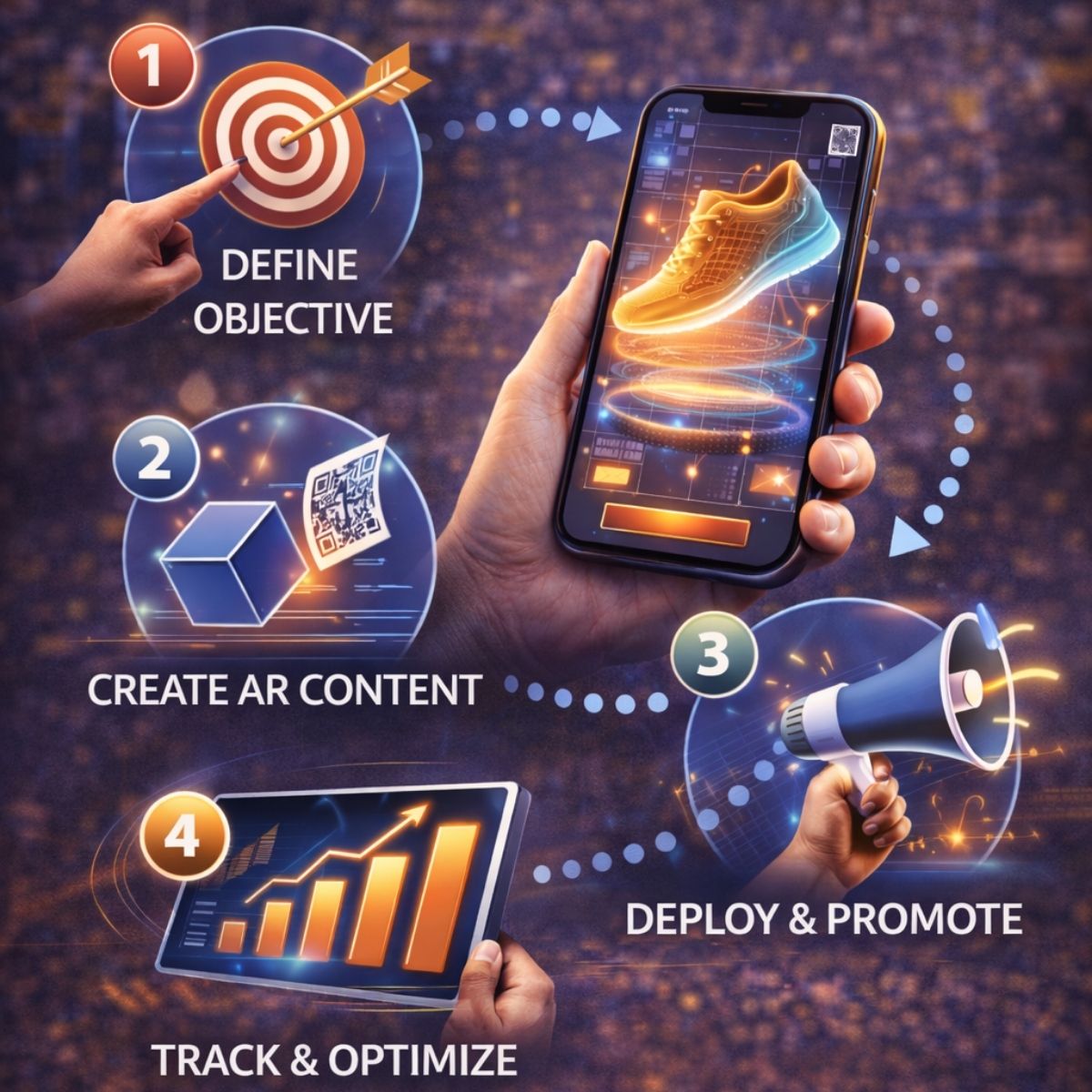
Define the conversion goal → Design the experience toward that goal → Optimize placement for maximum reach → Build a complete follow-up sequence → Integrate with CRM → Measure and optimize continuously.
XR+AI campaigns that follow this framework don’t just produce impressive engagement metrics — they produce revenue.
Build your first high-converting XR+AI campaign with SugarXR at sugarxr.com. Attention is hard to get. Engagement is hard to forget. SugarXR delivers both.